This page is home to work created through my journalism classes.
It includes assignments that have helped me grow as a writer and reporter. Some of these projects were built for the classroom, but all of them reflect the same things I care about in journalism: clear writing, careful reporting and stories that connect with readers.
This space gives me a way to collect that work and show what I’m learning along the way.
Introduction Video
Project One
Project Two
Students Tap Into Tradition With Maple Syrup Project
Students move from tree to tree along Milan’s residential streets, checking buckets and watching clear sap drip from freshly tapped maples. The late winter ritual is part of Milan High School’s agricultural science program, where students learn firsthand how maple syrup begins long before it reaches the breakfast table.
Before heading out to tap trees around town, students first learn the process in the classroom, where Milan High School agricultural science teacher and FFA adviser Todd Federer demonstrates proper drilling depth, tap placement and sap collection techniques.
Students also scout neighborhoods for suitable maple trees and ask homeowners for permission to tap them, turning the project into a small community effort as well as a hands-on science lesson.
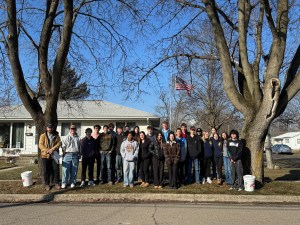
After identifying suitable trees, students drill a small hole into the trunk before inserting a tap that allows sap to flow from the tree and into a bucket.
Federer said maple syrup production depends heavily on weather conditions. Sap flows best when daytime temperatures rise above freezing while nighttime temperatures drop below it.
“When the temperatures fluctuate like that, the trees start moving sap,” Federer said. “That’s when we can collect it.”
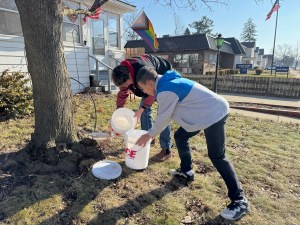
Once the taps are installed, students return regularly to check the buckets and monitor how much sap has collected.
One student lifts the lid of a bucket and peers inside at the clear liquid gathering at the bottom.
For many students, the experience offers a first look at the earliest stage of maple syrup production.
“It’s interesting to see how much sap actually comes out of one tree,” MHS senior Johnathan Ringbloom said while checking a bucket.
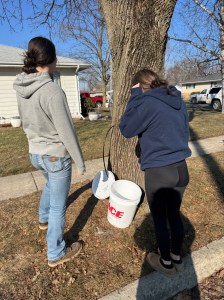
Collected sap is poured into larger containers before being transported for processing. While the liquid dripping from the tree looks clear and watery, it eventually becomes the thick syrup many people associate with pancakes and breakfast tables.
Producing maple syrup requires boiling large amounts of sap to remove water and concentrate the natural sugars. According to the Michigan Maple Syrup Association, roughly 40 gallons of sap are needed to produce one gallon of finished maple syrup.
The seasonal project allows students to see that transformation from beginning to end.
Students participating in the activity are also members of the school’s FFA chapter, part of a national organization that promotes agricultural education and leadership development.
The maple tapping project allows students to apply lessons from the classroom while learning about agriculture and natural resources.
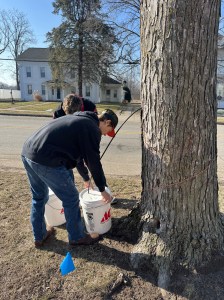
Federer said experiences like the maple tapping project help students better understand both agricultural science and natural resources.
“These kinds of projects make learning more real,” Federer said. “Students get to see where food products come from and how much work goes into producing them.”
As long as the freeze-and-thaw cycle continues in the coming weeks, students will keep returning to the trees they tapped around the city, checking buckets and collecting sap.
For students in Milan High School’s agricultural science program, the project offers a hands-on look at a seasonal tradition that has long been part of Michigan’s agricultural landscape.
Project Three
Chelsea Skate Park Project Is Already Shaping Local Business
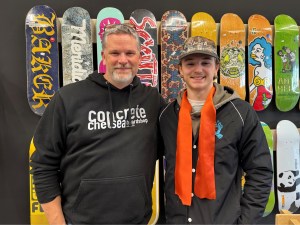
That can be seen in the opening of Concrete Chelsea Boardshop, a new business at 1159 S. Main St. The shop offers skateboards, skating accessories, clothing, direct-to-fabric printing and lessons listed as “coming soon,” according to its website. Even before the skate park officially opens, the new store suggests the project is already influencing what kinds of activity and business may grow around it.
The larger park project gives that opening more weight. The Main Street Park website says the project will create nearly three acres of parkland and was shaped through an eight-month public input process. The site also says $10.5 million has been secured for environmental remediation and park construction, 32,000 tons of contaminated soil have been removed, and construction is 75% complete.
According to the Main Street Park FAQ, Main Street Park Alliance purchased the property in August 2023 from Magellan Development Corporation. The site had previously been owned and operated by Federal Screw Works. The FAQ also says the alliance signed a development agreement with the City of Chelsea in 2023 and plans to transfer ownership to the city once the project is complete, with the city taking over operations and maintenance.
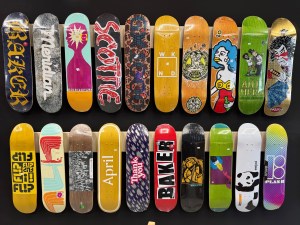
Rather than waiting until the skate park is finished, the owners chose to open while anticipation is still building. During an interview at the shop, Christian Rose said the decision came together after the family saw the skate park project moving forward and realized the area did not have a skate shop of its own. “There’s not a skate shop in the area, and you don’t have a park that nice without a shop,” Rose said
The new shop is not opening near the skate park by accident. It is opening because its owners believe the park will create demand for a place where people can buy gear, ask questions and feel more comfortable getting started.
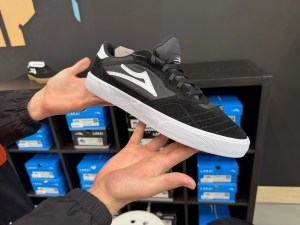
Skateboarding can look simple from the outside, but Rose said the equipment people start with can make a real difference. “Why spend 30 bucks on a board that’s only going to make it harder for you to do an extremely hard sport?” Rose said.
During a visit to the shop, Rose walked through differences in deck width, trucks, wheels and beginner setups, explaining that lower-cost complete boards often use lower-end parts that can make learning harder. The business is not just selling products. It is also trying to help new skaters understand what they are buying and why it matters.
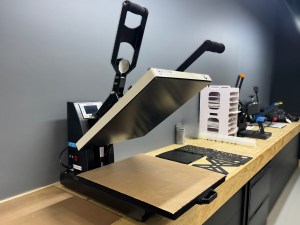
The store also reflects a second side beyond skateboarding alone. Fred Rose described the business as a blend of his son’s knowledge of skateboarding and his own design background. “I always say that this is his passion,” Fred Rose said. “I love designing.”
That mix helps explain why the shop includes more than decks and protective gear. Alongside skating products, the business also offers custom apparel and printing, giving it a broader identity and another way to connect with local customers.
The park itself is part of a larger redevelopment effort. The Main Street Park FAQ says environmental remediation began in fall 2024 and continued in April 2025 as part of the effort to transform a long-blighted industrial site into public park space.
The shop is an early sign that the skate park may begin shaping not only recreation in Chelsea, but also the businesses and community activity growing around it.
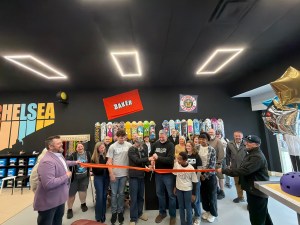
In that way, Concrete Chelsea Boardshop is not just a new business opening its doors. It is also part of a bigger story about how a major community project can begin changing the area around it before construction is even complete.
 Read, Write, Finch