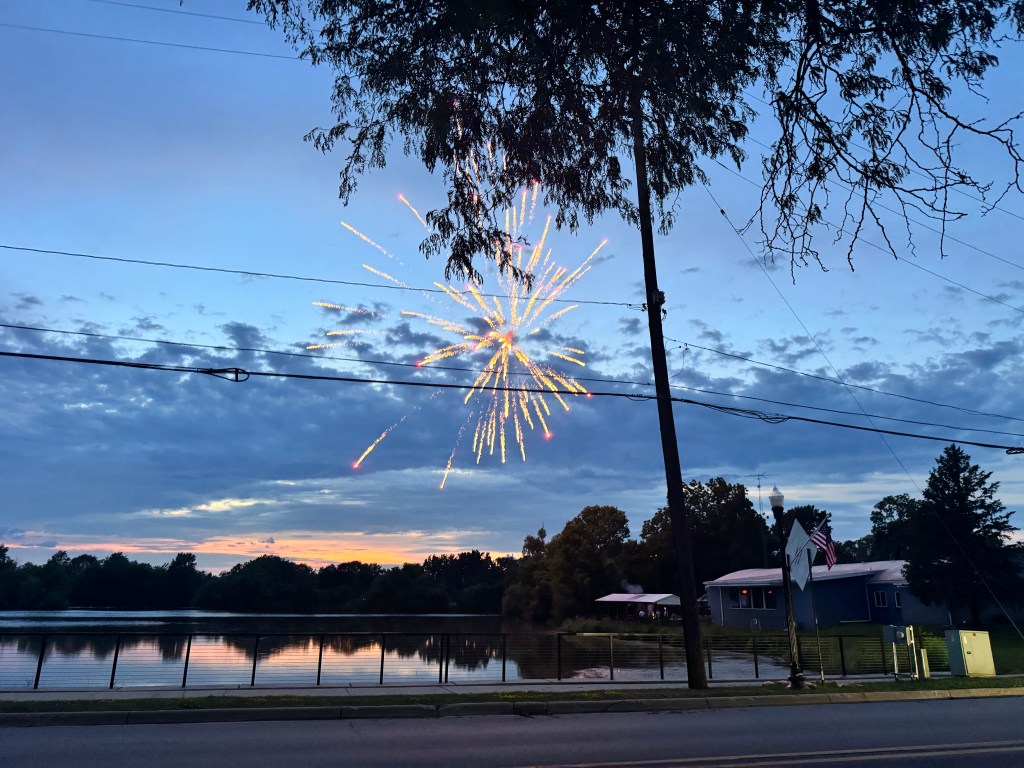
I did not plan to spend part of the Fourth of July weekend hauling branches out of a neighbor’s yard.
I also did not plan to lose power for about 48 hours, start mentally ranking the contents of my refrigerator by perishability, or become deeply emotionally attached to the sound of a generator.
But there we were, sweaty, muddy and very much not watching fireworks, helping clear a large downed tree. One neighbor showed up with two chainsaws, which already felt impressive. When I told him he looked like someone with chainsaw experience, he laughed, “I have five.”
That feels less like a tool collection and more like a personality type. It also turned out to be exactly the personality type you want nearby when a tree comes down.
He and his wife were wonderful, the kind of neighbors who do not make a big production out of helping. They just show up, start solving problems and somehow make an awful situation feel less awful. After helping cut up the tree, they loaned us a generator.
It was not the holiday weekend we planned. Weirdly, it may have been one of the better reminders of what community actually looks like.
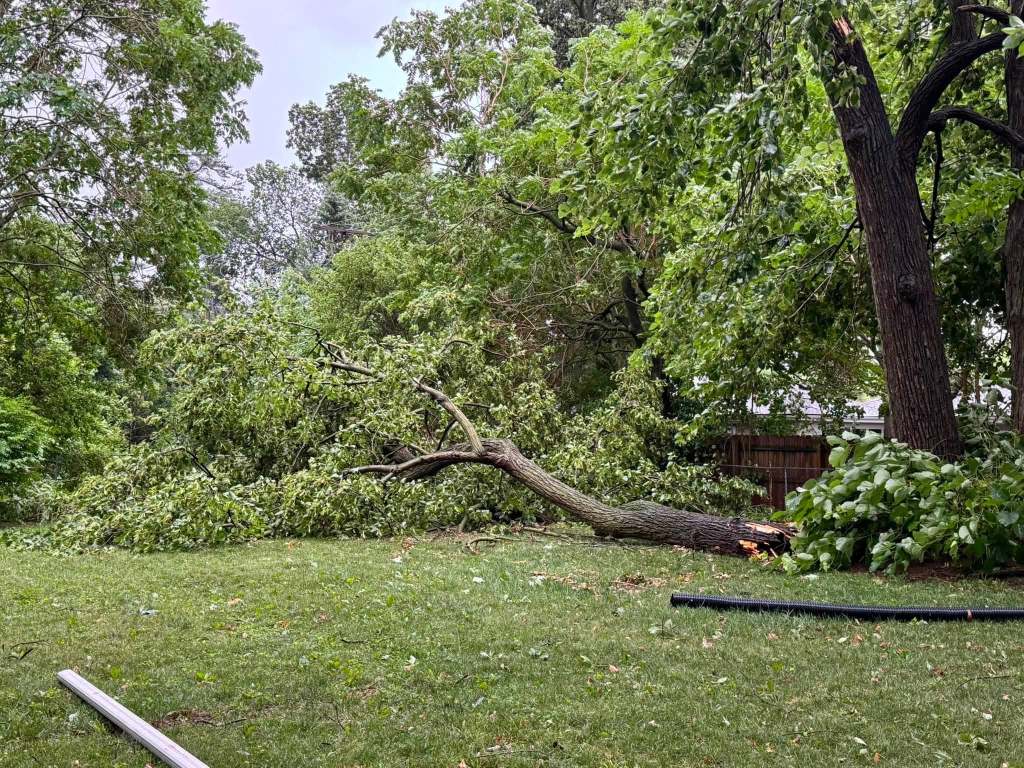
There is a particular kind of intimacy that comes with a neighborhood power outage. Suddenly, everyone knows who has a chainsaw, who has a generator, who has a truck, who has freezer space, who has strong opinions about extension cords, and who is going to walk outside and start helping before anyone has formally organized anything.
It is deeply inconvenient. It is also, in a strange way, clarifying.
For two days, the systems we usually trust to hum quietly in the background stopped humming. The invisible became visible: the wires, the trees, the crews, the wait times, the outage map, the bill, the infrastructure, the neighbor with work gloves already on.
And because I am a reporter, which apparently means my brain is legally prohibited from experiencing a normal human event without turning it into a civic question, I found myself thinking about DTE.
This is a terrible party trick. I do not recommend it.
But I have reported on DTE’s latest electric rate case, including the company’s request for about $474.3 million in additional annual electric revenue and a proposed 9.7% increase for residential customers. DTE says the request is primarily tied to investments in grid reliability and power generation. I have also reported on the related questions around data centers, ratepayer protections and whether the public can see enough of the math behind claims that large power users will not shift costs onto homes and small businesses.
Those questions feel different when the lights are out.
“Grid reliability” is a phrase that belongs in a filing until your fridge starts warming up. “Vegetation management” sounds like utility language until a tree is across the yard. “Ratepayer protections” can sound abstract until you are standing in your driveway, looking at storm damage, wondering how long the outage will last and what exactly you are paying for.
And we were far from alone.
WXYZ reported that severe storms Friday afternoon and evening left more than 321,000 DTE customers without power at the peak, with about 146,404 still without power Sunday morning. By the time I checked PowerOutage.us on Monday, July 6, the site still showed tens of thousands of Michigan homes and businesses without power, including thousands in Washtenaw County.
That is a lot of refrigerators. A lot of sump pumps. A lot of medical devices, phone batteries, missed work, spoiled groceries, anxious parents, hot houses and people refreshing an outage map like it might reveal the secrets of the universe.
It did not, in case you were wondering.
This is where utility policy becomes local, whether we want it to or not. It lands in kitchens and basements and backyards. It lands in the group text. It lands in the decision to open the fridge one more time or leave it closed and hope for the best. It lands in the person across the street saying, “Hey, do you need anything?”
It also lingers after the lights come back on.
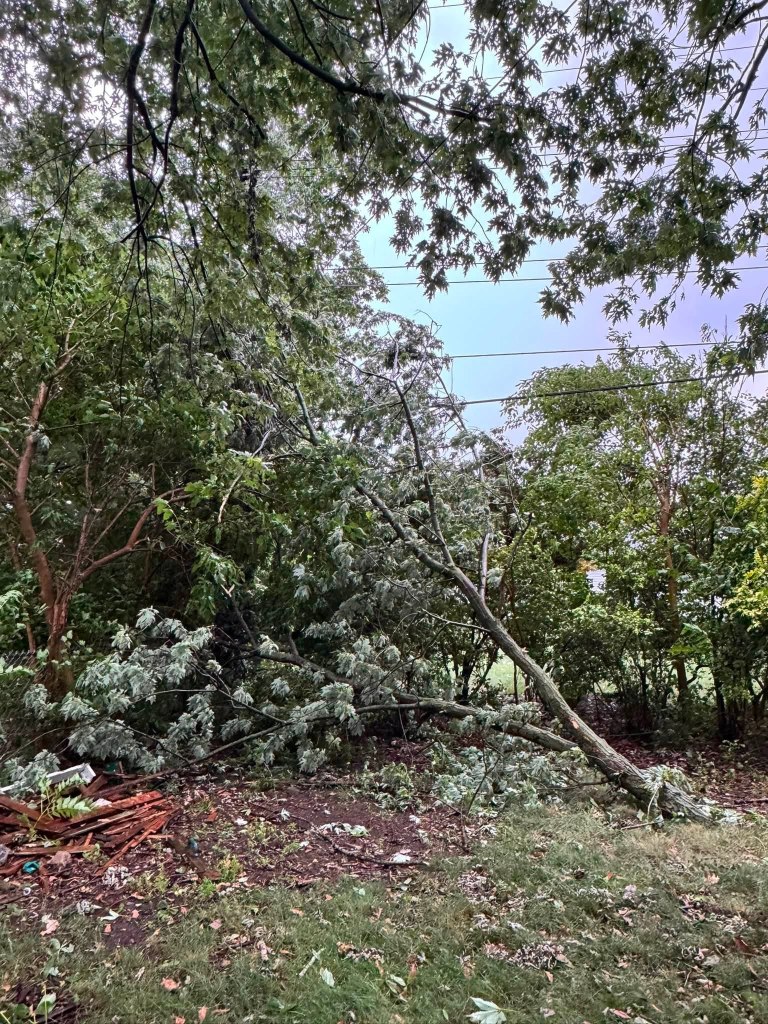
Our power was restored after about two days, but the story did not exactly end with the triumphant return of lamps and air conditioning. When the power came back on, sparks flew from the pole in our backyard.
That is one of those sentences that sounds dramatic because it was, in fact, dramatic.
We are still waiting for DTE to come back and repair the line damaged by the tree. We were told the tree broke the “ground wire.” I am not an electrician, so I will not pretend to know exactly what that means beyond the obvious: sparks from a backyard utility pole are not especially confidence-inspiring, and something important is still not quite right.
So yes, the power is technically back.
But the bigger system is still supposed to come back too.
I do not expect the power grid to be magic. Storms happen. Trees fall. Crews work long hours in miserable conditions, often while the rest of us are cranky, sweaty and one warm yogurt away from emotional collapse.
But when residents are asked to pay more, they are not just paying a bill. They are paying into a promise.
The promise is that the system will become stronger, outages will become less frequent or less severe, and money collected in the name of reliability will result in something people can actually feel the next time the wind picks up.
That is why the math matters.
Not because most people want to spend their evenings reading utility filings. Most people, very reasonably, would rather do almost anything else. Fold laundry. Reorganize a junk drawer. Watch paint dry and then file a public comment about the paint.
But if a utility says it needs more money to make the system more reliable, the public deserves to understand what that means. If large new power users are supposed to help reduce future costs, the public deserves to know how. If residential customers are being asked to pay more, they deserve more than slogans about investment and modernization.
They deserve proof that the promise is real.
The community part is what happened after the storm.
People came outside. They checked on each other. They dragged branches. They shared tools. They loaned generators. They turned a frustrating holiday weekend into something that felt, somehow, like the exact opposite of isolation.
I keep thinking about that contrast.
The grid failed. The neighborhood did not.